
Why Virtual Tours Are the Future of Digital Experiences
In today’s fast‑paced digital world, audiences no longer want to just read or watch—they want to experience. This shift in user behavior is driving the rapid adoption of virtual tours, making them one of the most powerful tools shaping the future of digital experiences. From real estate and travel to education and retail, virtual tours are redefining how brands connect with users online.
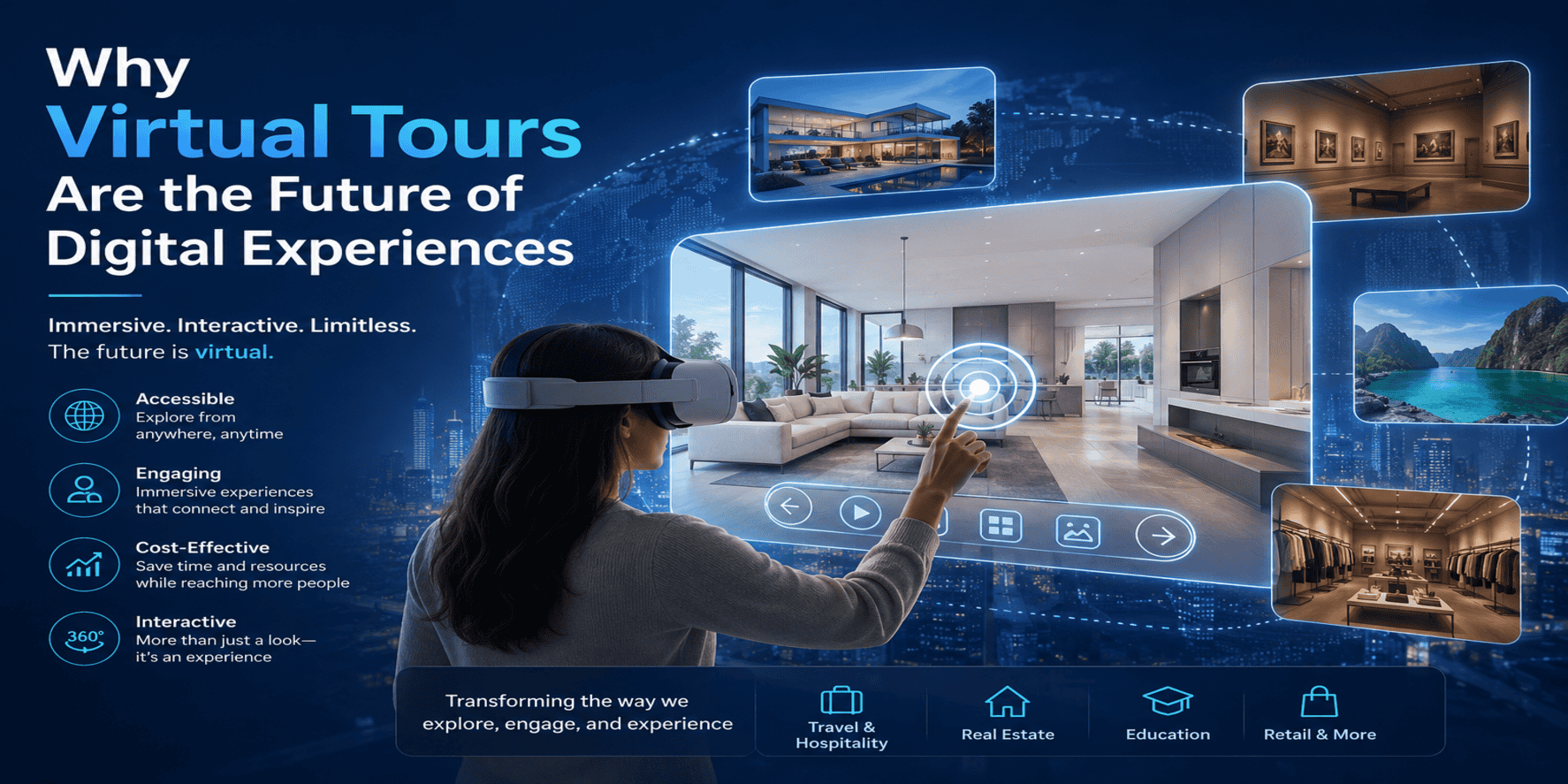
What Is a Virtual Tour?
A virtual tour is an interactive digital experience that allows users to explore a space remotely. Using 360° images, videos, 3D models, floor plans, hotspots, and multimedia elements, virtual tours simulate a real‑world environment directly on a screen.
Unlike static photos or traditional videos, virtual tours give users control, immersion, and freedom to explore.
Why Digital Experiences Are Evolving
Modern users expect more than basic content. Several factors are driving this evolution:
- 📱 Increased mobile and internet accessibility
- 🎮 Growing demand for immersive, interactive content
- ⏱️ Shorter attention spans
- 🌍 Global audiences wanting remote access
- 🤝 Need for trust and transparency before decision‑making
Virtual tours meet all these expectations in a single solution.
Key Reasons Virtual Tours Are the Future
1. Immersive User Experience
Virtual tours create a sense of presence. Users feel like they are actually inside the space, which leads to:
- Higher engagement
- Longer time spent on websites
- Better emotional connection
This level of immersion is impossible with flat images alone.
2. Anytime, Anywhere Accessibility
Virtual tours break geographical barriers. Users can explore locations:
- 24/7
- From any device
- Without travel costs
This is especially valuable for global businesses, real estate buyers, tourists, and students.
3. Higher Conversion Rates
Interactive experiences build confidence and trust. Virtual tours help users:
- Understand spaces clearly
- Make informed decisions faster
- Reduce uncertainty
As a result, businesses often see higher inquiries, bookings, and sales.
4. Strong SEO & Marketing Benefits
Virtual tours improve digital visibility by:
- Increasing dwell time
- Reducing bounce rates
- Supporting rich content (images, videos, text, embeds)
- Enhancing shareability on social media
Search engines favor engaging content—making virtual tours a strong SEO asset.
5. Cost‑Effective in the Long Run
Once created, a virtual tour can be reused across:
- Websites
- Social media
- Ads
- Email campaigns
- Sales presentations
This reduces the need for repeated photoshoots, physical visits, and printed materials.
6. Perfect Fit for Multiple Industries
Virtual tours are no longer limited to real estate. They are transforming:
- 🏠 Real Estate & Architecture
- 🏨 Hotels & Tourism
- 🏫 Education & Campuses
- 🛍️ Retail & Showrooms
- 🏢 Corporate Offices
- 🖼️ Museums & Galleries
Their versatility makes them future‑proof.
The Role of Advanced Features
Modern virtual tours include powerful enhancements such as:
- Hotspots with text, images, or videos
- 3D dollhouse views
- Interactive floor plans
- Dynamic embeds
- VR compatibility
- Analytics and user tracking
These features turn virtual tours into complete digital experience platforms.
The Future of Virtual Tours
As technologies like AI, AR, VR, and 3D visualization evolve, virtual tours will become:
- More realistic
- More personalized
- More data‑driven
- More integrated with e‑commerce and CRM systems